News and Insights
Why I Wrote “Healing the Sick Care System”
January 13, 2026
…and Why Patient Voice Matters Now More Than Ever
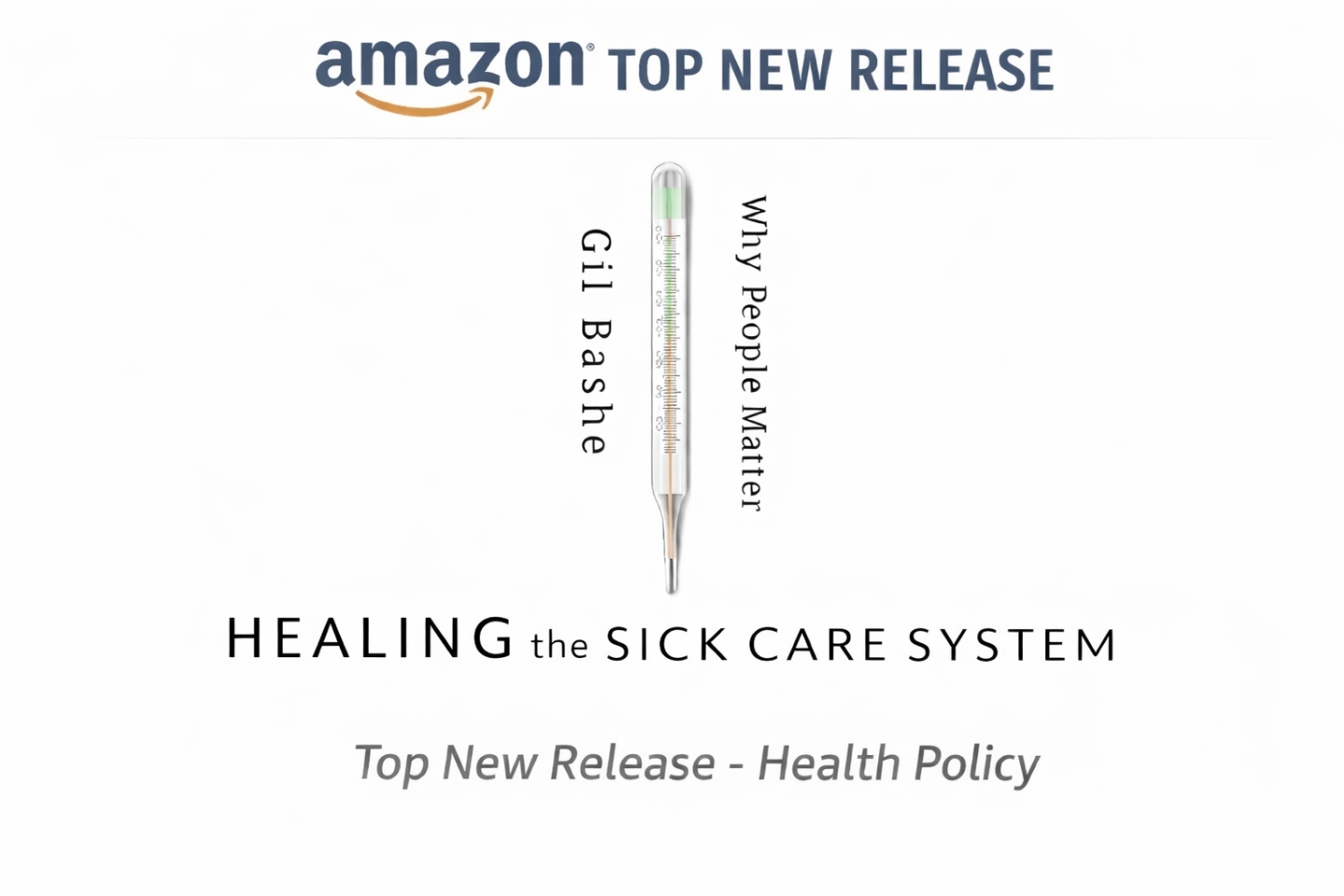
I did not set out to write a book. Yet, even in pre-order, Healing the Sick Care System: Why People Matter has hit the Amazon #1 new release in health policy ranking, which includes books by prominent government officials.
Like many people who have spent decades inside the health industry, I thought I understood its contradictions well enough. I had worked across the ecosystem as a combat medic, industry lobbyist, agency leader, NGO and for-profit board member, and, most importantly, as a father and caregiver to a child with a rare disorder. My role at FINN Partners has given me access to the incredible minds of colleagues from around the world. I believe that these experiences have given me a broad, informed perspective.
What I underestimated was how much the system had quietly drifted away from the people it exists to serve.
At its core, this book is about recalibrating and regaining perspective.
The health industry today is rich in talent, science and technology. It does not lack resources, despite many people’s needs going unmet. Yet patients routinely describe feeling lost, unheard and alone. That disconnect is not accidental. It is the product of a system assembled over decades to reward volume, protect silos and manage risk, often at the expense of trust, clarity and human connection.
Patients feel that disconnect first.
They experience it when medical records contain errors that no one owns. When prior authorizations delay care. When billing statements arrive months later, they are often indecipherable and overwhelming, as clinicians spend more time facing screens than people, when systems speak fluently in metrics but struggle with empathy.
One of the quiet casualties of our modern health system is the patient–physician relationship itself. As pre-authorizations multiply and documentation demands expand, time once reserved for listening, examining and thinking is consumed by process. Physicians become intermediaries between patients and algorithms, while patients experience care as a series of hurdles rather than a human exchange. Trust erodes not because clinicians care less, but because the system has made it harder to sustain connections. Healing the sick care system requires restoring that bond and protecting the space where judgment, empathy and shared decision-making still matter most.
As Matthew Zachary writes in his review of the book, “Healing the Sick Care System challenges leaders to stop hiding behind process and own the human consequences of the decisions they approve.” That sentence captures something patients have known for a long time: behind every policy choice, workflow decision, or reimbursement rule is a human outcome, whether acknowledged or not.
Patients are not abstractions. They are partners, witnesses and often unintended casualties of system design.
Grace Cordovano, PhD, a nationally respected patient advocate, conveys this reality with precision and moral clarity. She reviewed Healing the Sick Care System and reminds us that “behind every test result, every diagnosis, every policy, every prior authorization, there is a person who needs and deserves to be seen, heard, and treated with dignity.” That dignity is not a “nice to have.” It is foundational to healing.
Writing this book forced me to confront an uncomfortable truth: much of what we label as patient “confusion” or health professional burnout is actually system failure. We have normalized complexity and then blamed the very people who are struggling within it.
Perspective matters because it determines what we notice and what we excuse.
From a balance sheet perspective, health delivery can look successful. From a patient’s perspective, it often feels fragmented and transactional. From a health professional’s perspective, it can feel unsustainable. From those who toil to bring innovation into the health system, the obstacles only seem to grow. These realities coexist, and unless we reconcile them honestly, no amount of innovation will fix what is fundamentally a human problem.
This book does not argue against markets, progress or technology. It supports the health ecosystem. It argues for intention.
Tools matter. Incentives matter. Data matters. However, without a clear orientation toward people — patients and professionals alike — even the most sophisticated systems drift off course. The goal is not to dismantle the health ecosystem, but to recenter it.
Tom Lawry, former Microsoft executive and AI transformational leader, who generously wrote the foreword to this book, frames this moment with clarity and insight. He reminds us that health is at an inflection point, one defined not just by technological possibility, but by moral urgency. Burnout, distrust, chronic disease, and inequity are not just side effects; they are signals of a deeper issue. They tell us something fundamental needs attention.
What gives me hope is that patients are no longer silent.
They are organizing, advocating, questioning, and demanding better. They are asking why care feels harder than it should. Why does access depend on zip code, income or literacy? Why innovation moves faster than compassion. Why a system designed to heal often forgets what care actually feels like.
This book is written for them and for all of you.
It is also written for health professionals and corporate leaders who feel caught between purpose and process. They sense that performance and humanity are not opposing forces, but mutually reinforcing ones. For policymakers and innovators who want to build systems that scale without compromising their core values, I hope they will also read this book.
Most of all, it is written with humility. I do not claim to have answers to every problem. What I offer is a reframing, an insistence that progress must be measured not only in outcomes and efficiencies, but in trust restored, voices heard and people supported.
Healing the sick care system begins with remembering why the system exists.
If you are a patient, this book affirms that your experience is real and worthy of attention. If you are a caregiver, it recognizes your unseen labor. If you work within the health system, it acknowledges the complexity of your role while challenging the structures that make it more difficult than it needs to be.
Perspective is not passive. It is a choice.
Choosing to see the potential to deliver health care through the eyes of the people it serves is the first step toward building something better together. This book is about remaining hopeful and making a difference.
For more information about Healing the Sick Care System: Why People Matter, visit https://a.co/d/jcPxdGE.
POSTED BY: Gil Bashe