News and Insights
Q&A with a Legendary Leader in Workforce Development and Education
February 6, 2026
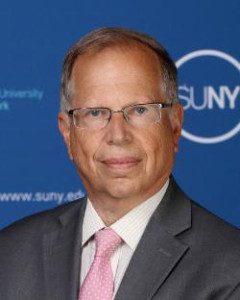 Stanley S. Litow Shares His Views on Today’s Education Landscape
When you think about leadership in industry and philanthropic innovation, it’s hard–if not downright impossible–to not talk about Stanley S. Litow. Litow, or Stan as we all call him, is the architect of contemporary corporate philanthropy, having helmed the IBM Foundation and practically inventing corporate social impact as we now understand it. He’s currently a Professor at Columbia University’s School of International and Public Affairs, President Emeritus of the IBM Foundation and a trustee of the SUNY Board. Prior to all that he was Deputy Chancellor of Schools for the City of New York and served on several high-level presidential commissions.
With the recent passing of former IBM CEO, the legendary Lou Gerstner, Stan reflected on their work together and explored their vital partnership which focused on improving education and workforce preparedness in this country. It was an inspiring conversation and a heartening reminder of the ways in which purpose driven business leadership can truly create innovation and opportunity for students and educators.
It’s fair to say that Litow and Gerstner helped usher in a new way for public-private partnerships to leverage private sector priorities for the benefit of the communities they serve. In 2026, the world looks radically different, but the notion of good corporate citizenship has held steady and evolved in ways that impact brands’ bottom line whether we’re talking about personal gaffs on social media or high stakes public policy debates. It remains an imperative for purpose driven organizations to navigate the opportunities and headwinds of the day, especially in the education sector.
Stan, you’ve led a number of innovative and long-lasting education initiatives, tell us a bit about how you got started and the work you’re proudest of.
After serving in the Mayor’s Office in NYC, I headed the Educational Priorities Panel in New York City and helped NYC schools weather the fiscal crisis of the late 1970s. I then served as Deputy Schools Chancellor for NYC and then as President of the IBM Foundation with a focus on education reform. During my 25-year tenure at IBM, I organized and led three National Education Summits and many reform efforts, including the design of the P-TECH program. (The Pathways in Technology (P-TECH) program, which originated in New York City with IBM Foundation funding, is a public-private partnership that prepares students for high-skills jobs of the future in technology, manufacturing, healthcare and finance. The dual-enrollment model has since expanded around the U.S. and globally.)
What opportunities do you see to replicate the work you and Lou Gerstner led in corporate America today?
I think the opportunities for corporations and the business community at-large to make an impact on education in America are still very real. We are experiencing a huge teacher shortage, the most significant reduction in the birth rate in recorded history, and we have disappointing levels of educational achievement. Corporate America could engage in a number of ways. Most tactically, using their platform to support a large-scale, solutions-oriented convening could go a long way to identify solutions to the emerging crisis, and encourage public-private partnerships and investment in key reforms with proven outcomes. There are real ways today to make progress in solving these problems and impacting society, the economy, and the ability of corporations to recruit top talent.
What is exciting you about education in America today?
What is exciting to me is we have models of success that demonstrate conclusively how to solve critical problems and achieve significant results, but the challenge is in bringing those solutions to scale and making them sustainable. This will require joint action at the federal and state levels, along with public-private partnerships and engagement of all key stakeholders including the private and not-for-profit sectors.
What is causing you concern about education in America and globally?
What concerns me is the silence and lack of engagement of the private sector in the needed and necessary systemic solutions needed to achieve significant reform. This was Lou Gerstner’s mission and goes beyond philanthropy and requires meaningful engagement at the political and governmental levels. Our workforce needs are continuing to evolve and change rapidly, at the same time our higher education institutions are under pressure to not only keep up but demonstrate ROI. That tension will need to be addressed with all the stakeholders at the table, particularly today. Under Gerstner’s leadership IBM developed a new strategy that went beyond checkbook philanthropy. Today, we need that kind of vision again; we need leadership and a focused way to collaborate with partners in government and civil society to actually solve critical societal problems.
What do you think is missing from the conversations around workforce development happening in education right now?
I think we need more meaningful engagement of the private sector at all levels. Students and faculty need mentors, students need paid internships, faculty need more exposure to the changes taking place in the workplace, and people with private sector experience need to engage in the development and refinement of curriculum and much more. The future growth of our economy will depend upon our ability to educate, train and retain talent. For example, leaders like Gerstner did more than just have IBM design and contribute a range of innovative solutions. He got personally involved and inspired others to join with him in affecting large scale societal issues.
In today’s changing landscape, how can educators and the programs that support them better reach corporate philanthropies and other partners?
We need to create more civic entities with participation by professionals at the highest level in government, business, labor, and the not-for-profit sector to engage together in effective policy strategies with full engagement and support of all elements and all key stakeholders. More broadly, we are seeing the consequences of not maintaining robust civic engagement. Transactional relationships will only get us so far. Today’s world requires authentic partnership with aligned strategic imperatives.
As a SUNY Trustee you have a front-row seat to one of our nation’s most powerful and effective public higher education systems. What do you wish people understood about SUNY and more broadly about higher education today?
Public education institutions at the higher education level are critical to economic and societal success. They are an essential component of a functioning democracy. The notion that college doesn’t matter is not borne out by the data and the facts. Higher education matters now more than ever and has always been of critical importance to the nation’s success. We need to engage all elements of society in restoring the importance of higher education and building nationwide support.
If you and Gerstner were planning the National Education Summit championed at IBM today, what would it look like? Who would you include? Why?
In the current environment, far too many business leaders are staying silent on critical societal issues, particularly education. We need to engage the nation’s governors and congressional leadership, along with key CEOs from every sector and state across the US, along with labor leaders and education leadership, as well as student leaders. We must engage the best policy analysts to frame the current state of affairs and then engage key stakeholders in identifying the most effective solutions and the barriers to implementation, and focus on an effective implementation strategy with accountability measures in place.
POSTED BY: Marina Stenos