News and Insights
An Invitation, Not a Victory Lap: Lindsey Cormack on Citizenship, Communication, and America at 250
June 16, 2026
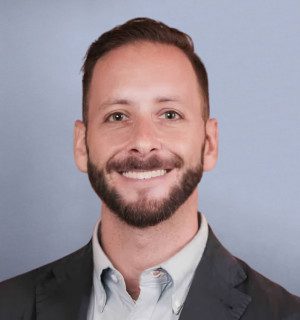
 Lindsey Cormack has spent her career at the intersection of civic life and strategic communication, studying how institutions talk to citizens, why young people disengage, and what it takes to rebuild that connection. She is a political scientist and professor at Stevens Institute of Technology, creator of DCinbox, and author of How to Raise a Citizen (And Why It’s Up to You to Do It). Ahead of America’s 250th anniversary, Marina Stenos and Julian Vinocur sat down with her to talk about what this moment demands, and what educators, communicators and institutions can do to make it mean something.
America turns 250 this year, and the backdrop is notable. The Harvard IOP Spring Youth Poll found only 13% of young people say the country is on the right track, and a Deseret News survey found that patriotism itself has become a partisan identifier. You’ve spent your career trying to build civic engagement. How should we be thinking about this milestone?
The Harvard data tell me we do not need a celebration that is just “Rah rah America, everything is awesome.” We need one that says: this country is awesome and it has always been unfinished because of that, you and I have an enormous role in what happens next. That’s an amazing responsibility, and an opportunity that many people around the world simply do not have.
I want America 250 to feel like an invitation, more than a victory lap. An invitation to up our civic care by learning the system, caring for your community, disagreeing honestly and civilly, and finding pride in a sense of patriotism rather than partisanship.
That idea of an invitation rather than a victory lap runs right through your book. How to Raise a Citizen is as much a communications challenge as a parenting guide. You’re writing for an audience that often dreads politics and has been conditioned to avoid it at the dinner table. What did reaching that audience teach you about making a charged subject feel approachable?
I started from the belief that most parents are overwhelmed, not apathetic. Most parents today were also raised in systems that were already actively deprioritizing civics, so I don’t fault anyone for not knowing as much as they wish they did. Politics can feel angry, confusing and high-stakes, so of course people want to avoid it at the table.
My goal was to lower the temperature. To recognize these conversations as necessary and even good for us, and to give parents the encouragement and confidence to start learning alongside their children. It can begin with very simple questions: Who decides whether the playground gets fixed? Why does the library have certain hours? What happens if a street is unsafe? Once people understand that government is not some distant force but a set of decisions made by people, civics starts to feel less threatening and more usable.
That gap between what government is and how it gets communicated is something you’ve spent years studying. Tell us about DCinbox and what it has revealed.
DCinbox is an archive of every official e-newsletter that members of Congress have sent to their constituents since 2009, now over 222,000 messages. I built it because I wanted to understand how elected officials actually communicate with the people they represent, not just how they vote, but what they say, how they frame issues, and what signals they send.
What I’ve found is that legislators don’t just communicate with constituents; they strategically perform for them. They signal what matters, who is to blame, what legislative battles they are waging, and what terminology to use when thinking about different subjects. If people learn and understand politics through repetition, if every message tells constituents that the government is corrupt, broken or controlled by enemies, people absorb that. Institutions can accidentally train people away from agency. Good civic communication should not just mobilize outrage. It should help people understand where power is, what choices exist, and how they can participate.
Pew found that trust in government is near a 70-year low, and the Harvard poll found the defining shift in this generation is a loss of perceived civic agency. You work with college students every day. What are you actually seeing?
The data match what I see with a lot of young people, but it doesn’t tell the whole story. When an issue becomes concrete or immediate, students engage. Housing, access to reproductive health care, firearms regulation, safety, AI, transportation, jobs, the cost of living, these things are not abstract to them. But they sometimes stumble when trying to figure out what to do, partly because many students have not been shown which level of government controls which policies. They give up in confusion. Once they can see the lever, though, they are much more willing to pull it, and those levers are often closer than we think. Much of that list is the realm of state and local politics, which are far easier to influence than federal politics, but are precisely what students are taught the least about.
So what does America 250 actually mean for a young person today?
Probably not much, and there’s no reason it would, unless we make it real to them. A 20-year-old does not need another vague message about civic pride, but history and perspective can change that. America is the longest-lasting democratic republic the world has ever known. Most don’t know that our founders looked to 200 years of democracy in Athens as a model, a model that lasted just that long before giving way to monarchy, dictatorship and religious autocracy across the globe. It wasn’t until 1776 that a people collectively asserted that the social order was not some natural arrangement based on family lineage, and that each person had inalienable rights regardless of the station of their parents. With the serious and unresolved complication that slavery was in direct conflict with that claim.
The fact that our constitutional republic has continually expanded the franchise means that each generation has its own founders of this ongoing experiment to look to and learn from. I tell my students: everyone is a founder. So what kind of country do you want to help build, and what is one piece of it you can start working on now?
You’re actually trying to answer that question on the ground at Stevens through the ALL IN Campus Democracy Challenge. Last fall NJ Spotlight covered your students leading with conversations about e-bikes and public safety to register young voters because that’s what students said they cared about. Is the civic engagement problem really a knowledge gap?
Yes, but it’s not only a knowledge gap. Knowledge is the foundation, but know-how is the other critical piece. Knowledge matters because without it, students don’t know where to bring a problem. Know-how matters because it’s how students understand their own agency. At Stevens, our student leaders are building both when they register voters and host candidate forums.
K-12 education should give young people the basic map of how government works and some early lessons in how they fit into it. Higher education should help them use that map and give them opportunities to practice. Beyond formal education, informal spaces, libraries, parent groups, youth organizations or campus clubs can all make civic learning more possible. Different approaches and environments offer different entry points. Exposure to many styles of civic engagement is probably more multiplicative than additive.
And when you give them the map and the know-how, what actually moves them?
Peers are the best at influencing each other, especially at the college level. Student leaders and ambassadors have more overlap in what’s resonant and relevant, and that matters enormously.
Specificity works better than generality. Telling people “democracy matters” is almost never enough to motivate them toward information seeking or action. Showing people who decides whether a dangerous intersection gets fixed, or whether federal financial aid strategies are going to change, is much more effective.
People also respond when civics feels doable. The most effective civic education gives people a clear next step and a reason to believe that step matters.
For the educators, communicators, organizations, and institutions trying to figure out what to do with this moment, what does it actually mean to treat this anniversary as an invitation rather than a victory lap?
Do not make the marking of the 250th only about the past. The founding is incredibly important, but this country has been remade by generations of people who were excluded from that original story and still insisted on shaping it. Each generation has its own founders of this ongoing experiment to look to and learn from.
That means making sure people recognize their own agency in it. The best America 250 communications do not say “Look what they built” and leave it at that. They say “Look at this wondrous thing we have, and what an awesome responsibility it is to be able to craft the next version.” That’s the invitation. That’s what makes it matter beyond July 4, 2026.
What’s your favorite way to celebrate the 4th of July?
I love fireworks, and this year I’m planning to be up in the Hudson Valley, at the nation’s first publicly owned historic site, Washington’s Headquarters in Newburgh, New York.
_________________________________________________________
At FINN Partners, we specialize in translating complex systemic shifts into compelling, data-driven narratives. Whether you need to build community coalitions, advocate for essential policy changes, or launch targeted campaigns that resonate with parents, educators and policymakers, our experienced team is ready to embed with your mission. Contact FINN Partners today to learn how our strategic communications, PR and advocacy experts can help your organization protect the promise of education and drive meaningful change in your community.
POSTED BY: Marina Stenos,