News and Insights
Why the biggest stand isn’t always the biggest story: Lessons learned as we look ahead to Infosecurity Europe 2026
May 6, 2026
What 3,900 mentions of Infosecurity Europe 2025 taught us about who actually gets heard and how to be one of them in 2026.
IN THIS BLOG, YOU WILL LEARN:
- Why Infosecurity Europe is worth the investment in 2026, and what nearly 3,900 media mentions around the event in 2025 reveal about where attention actually lands
- Why the biggest stands don’t necessarily win the biggest coverage, and the four patterns that defined the vendors that did
- The pre-event mistakes that leave well-funded stands with strong leads but limited earned coverage
- Practical advice for Infosecurity Europe 2026.
For any cybersecurity vendor weighing up whether to invest in Infosecurity Europe 2026, the simple answer is: yes. According to FINN Partners Research & Insights, in the months surrounding Infosecurity Europe 2025 (1 April 2025 to 31 July 2025), the event generated almost 3,900 media mentions.
Earned attention around the event spiked not only before, but also in the weeks after, with the trade press – SC Magazine, Infosecurity Magazine, TechRadar, The Register, Computer Weekly and CSO – unsurprisingly dominating most of the stories.
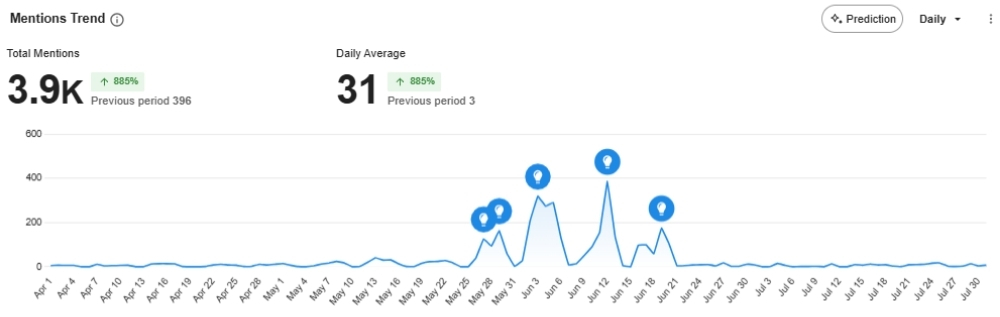
Total mentions of Infosecurity Europe between 1 April 2025 and 31 July 2025
However, that lift is not evenly distributed. Looking through the coverage, one pattern stands out: the vendors that captured the most attention were rarely the ones with the most expensive stands. Indeed, some of the loudest names in the post-event coverage likely did it on a fraction of the budget. Here’s a look at FINN Partners’ research and insights data and what we would recommend cybersecurity vendors do for Infosecurity Europe 2026.
The coverage is real, but it is concentrated
The build-up week to Infosecurity 2025 alone generated 720 mentions, with a daily average of 80 mentions (25 May 2025 to 2 June 2025), while the event and post-event periods generated a further 2,400. Within that, a small number of editors and outlets across the security press account for most of the volume.
What’s important to remember at trade shows, is that showing up is not the same as being seen. If you don’t have a well-mapped-out story and solid news, particularly on trending topics that journalists will be covering, the show will likely pass you by.
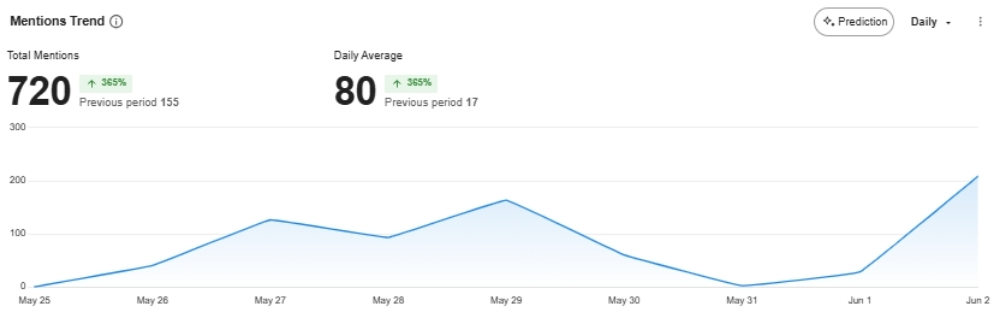
Pre-event mentions of Infosecurity Europe between 25 May 2025 and 2 June 2025
What “winning” looked like
Four patterns repeated in the brands that punched above their weight:
- A point of view, not a product feature. The themes that emerged during the show, including shadow AI, post-quantum readiness, the “era of consistent attack,” identity-first security and agentic AI risk, were already topics journalists were chasing. Brands that arrived with a clear opinion on one of them got pulled into the big features
- Proprietary data, served at the right moment. EasyDMARC turned a single statistic – more than 90% of top email domains were vulnerable to spoofing – into a successful news hook, earning trade coverage off the back of it. Additionally, Mindgard’s survey on the pervasiveness of shadow AI inside cybersecurity teams became one of the most-covered stories during the post-event window. The lesson isn’t “do a survey”, it’s “have something to say that no one else can say, and prove it.”
- A story a journalist can pitch in one line. While Semperis was modest in terms of stand size, the company generated decent coverage during Infosecurity Europe 2025. The reason was two-fold: a “needle in the haystack” piece on attack preparation, and Operation 999, which was an immersive ransomware drill reporters could walk into. Each of those is a one-line pitch a journalist can sell upwards
- A drumbeat, not a moment. The pre-event coverage peak was larger than many vendors realised. Varonis went out early with its full event schedule. Criminal IP framed its debut as news, RSA used the show as a platform for its Identity Security Posture Management and passwordless updates, seeing the announcements before doors opened. By the time Infosecurity Europe opened its doors, those brands were already in the conversation.
What didn’t work
Plenty of stands with heavy investment may have generated sales leads, but they also generated almost no earned coverage. This is a missed opportunity. There could be many reasons why, such as launching a product without a story, pinning everything on show floor footfall or treating media interviews as product demos rather than conversations. The 3,900 mentions mostly relate to brands that had a story to tell.
What to take into Infosecurity Europe 2026
While there’s no one-size-fits-all approach, the best way to be seen is to find a compelling, trending theme that journalists are covering – or should be covering – and have a proven point of view on it.
Build one piece of proprietary data, such as a survey/research or even customer data that backs up trends, timed to release in the build-up week (not announced from the booth).
Treat Infosecurity Europe as a three-week story arc: pre-event drumbeat, on-site moments, post-event analysis. And finally, brief spokespeople for context and opinion, not sales pitches.
If you’d like to see how your 2025 share of voice compared with the wider field – and what a smarter PR plan for 2026 might look like – please don’t hesitate to get in touch: techlondon@finnpartners.com.
For information on cybersecurity PR, including event support, visit our Technology page. For an overview of our intelligence services, visit FINN Partners Research & Insights.
FREQUENTLY ASKED QUESTIONS
IS INFOSECURITY EUROPE STILL WORTH ATTENDING IN 2026?
Yes. FINN Partners Research & Insights tracked almost 3,900 media mentions in the months surrounding Infosecurity Europe 2025, with significant peaks both before and after the show. There’s an opportunity to secure earned coverage, but it goes to vendors with a story to tell.
DOES A BIGGER STAND AT INFOSECURITY EUROPE MEAN MORE MEDIA COVERAGE?
No. Our analysis of Infosecurity Europe 2025 found that stand size was a poor predictor of share of voice. Several of the most-covered brands invested far less than competitors who generated little to no earned media coverage. Focus on a clear narrative, proprietary data and a pitchable angle instead to interest journalists.
WHEN SHOULD WE START OUR INFOSECURITY EUROPE PR ACTIVITY?
As early as possible, not only because journalists’ diaries fill up quickly, but also because last year’s build-up week alone (25 May 2025 to 2 June 2025) generated 720 mentions, averaging 80 per day. Vendors that announced news, schedules or research in the run-up to the show were already part of the conversation by the time the doors opened.
WHAT ARE THE BIGGEST MISTAKES VENDORS MAKE AT INFOSECURITY EUROPE?
Treating Infosecurity Europe as a single moment, rather than a three-week story arc. Heavy investment in the show floor without a pre-event drumbeat or post-show follow-up is the most common reason well-funded stands generate strong leads, but almost no earned coverage.
POSTED BY: , Jonathan Mathias