News and Insights
Global lifestyle summit 2026: The attention recession
November 9, 2026
For communication professionals in travel, the first week of November is synonymous with World Travel Market (WTM), the biggest travel trade show of the year. Since 2024, FINN has hosted the Global Lifestyle Summit on the eve of WTM, inviting leading media and industry voices to explore the key themes influencing communication decisions for travel and lifestyle for the year ahead.
This year, we opened up the floor beyond media voices, to include major digital platforms, organizations and brands at the very forefront of industry change – and tackle the fragmentation of attention driven by AI and the growing movement toward community-based content.
To help address these challenges, we leave you first with a mini-lexicon from our panelists, as well as our usual “you-heard-it-here first” insights.
A heartfelt thank you to News UK for hosting us in their soaring offices above London Bridge, and to Pan Pacific London for generously extending SENSORY Wellness passes to each of our panelists!
If you would like to explore any of these challenges with us, please get in touch with us at london@finnpartners.com.
Your mini (attention) recession-proofing lexicon
*Journ-fluencers*
Bacardi’s name for journalists who are also influencers in their own right, as told by Nneoma Ulu, Global Director of PR, Influence & Cultural Partnerships at Bacardi. Not just a PR buzzword, it’s a role deliberately given more prominence in the media, confirms Anna Sbuttoni, Deputy Head of Digital at The Times & Sunday Times.
*Intentional friction*
This is the antidote to hyper-seamless digital design, says Alex Hawkins, Director of Strategic Foresight at The Future Laboratory. It’s the deliberate introduction of speed bumps, pauses, and physical bounds into experiences, forcing consumers to slow down, build rituals, and trade passive scrolling for meaningful connection.
*r/fattravel* (and its little brother *r/chubbytravel*)
Referring to the size of your wallet, not your waistline, these are the Reddit communities where affluent travelers swap raw, unfiltered advice on top-tier luxury stays with trusted audiences – highlighted by Robert Turnbull, Head of Insights at Reddit, Inc. For a number of years already, the platform has been a bellwether for cultural trends and brand sentiment – and is now growing in strategic significance thanks to LLMs.
From front pages to feeds
Charting today’s archipelagos of attention
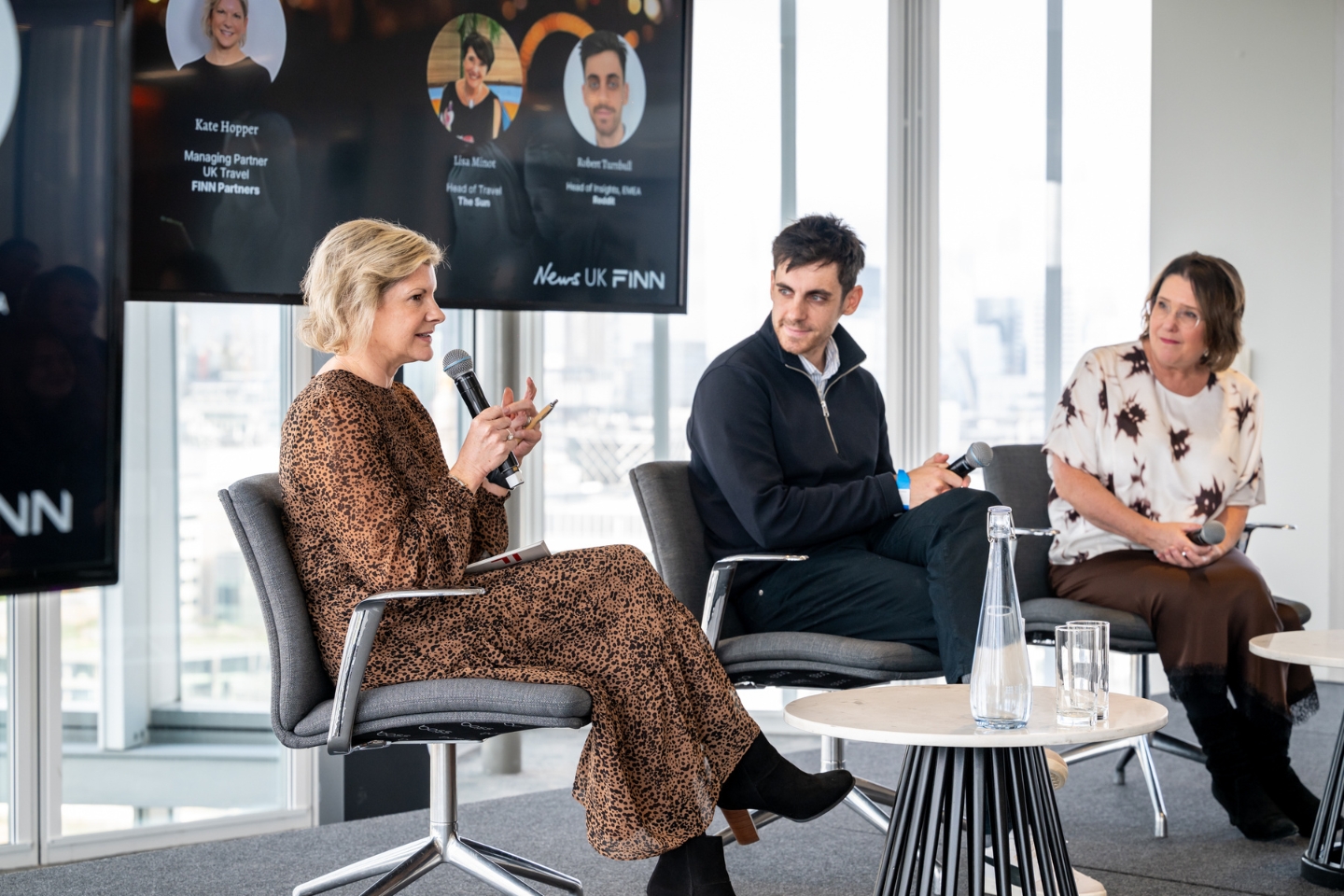
Moderated by Kate Hopper, Managing Partner, UK Travel, FINN Partners
Lisa Minot, Head of Travel, The Sun
Robert Turnbull, Head of Insights EMEA, Reddit
- The path to purchase is becoming increasingly complex. Travel inspiration may begin with social media, online communities or AI-powered discovery, but travelers continue to seek validation from trusted sources before making decisions.
- Visibility does not automatically equal influence. As AI reshapes search and discovery, brands must focus on becoming a trusted answer to consumer questions rather than simply competing for impressions.
- Trust remains travel’s most valuable currency. While audiences embrace new platforms and technologies, credible journalism and expert voices remain particularly important when consumers are making expensive or high-stakes decisions.
- Consumers are no longer moving through a linear funnel. Audiences bounce between platforms, communities and sources of information, often researching over extended periods before booking. This fragmentation makes consistency of message across channels more important than ever.
- Online communities are increasingly functioning as modern-day word of mouth. Rather than relying solely on influencers or search engines, consumers are actively seeking recommendations from people they perceive as peers, creating new opportunities for brands that can participate authentically in those conversations.
Trading places
Are brands and publishers swapping roles?
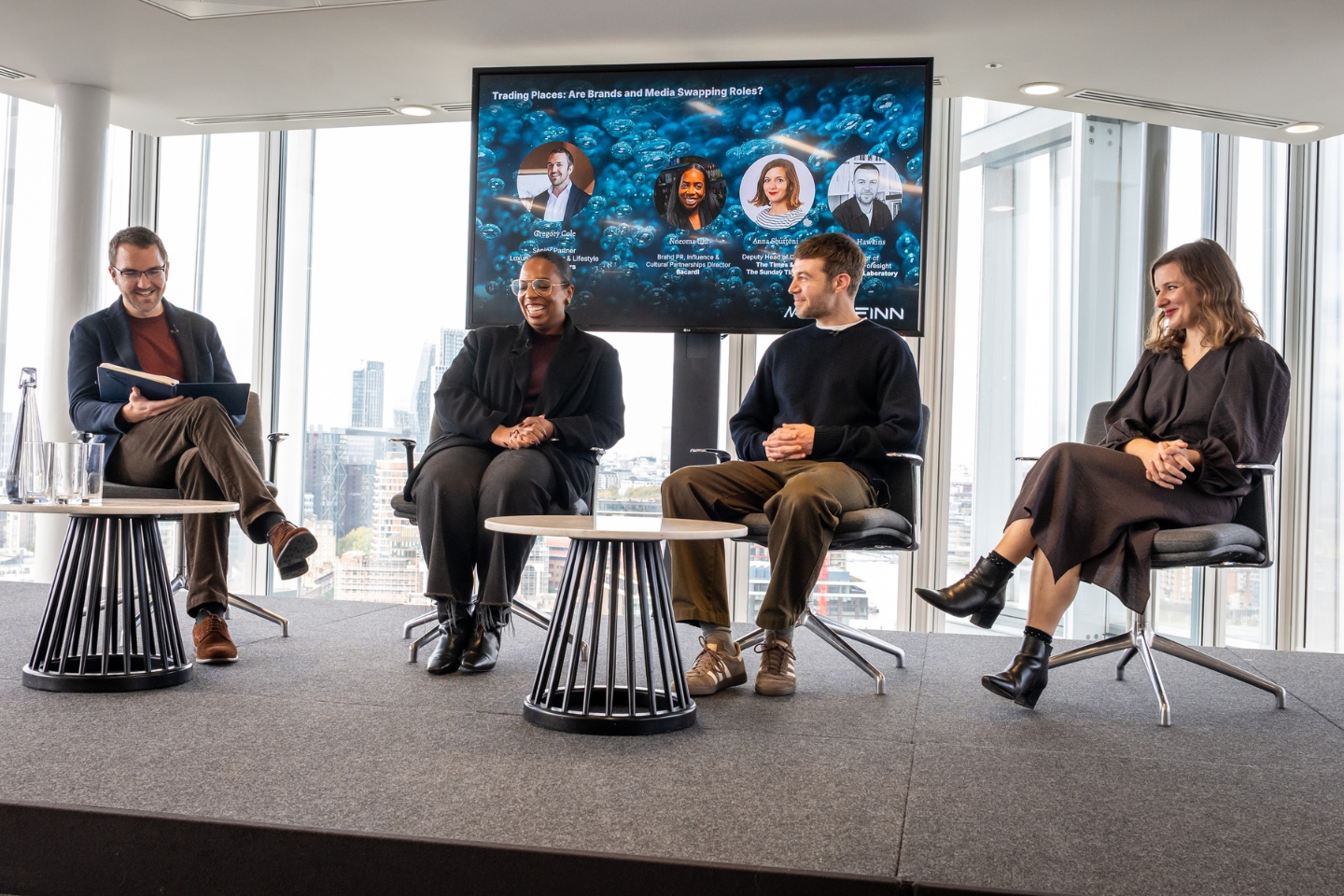
Moderated by Gregory Cole, Senior Partner, Luxury, Consumer & Lifestyle, FINN Partners
Alex Hawkins, Director of Strategic Foresight, The Future Laboratory
Nneoma Ulu, Brand PR, Influence & Cultural Partnerships Director, Bacardi
Anna Sbuttoni, Deputy Head of Digital, The Times & The Sunday Times
- The distinction between brands and media is increasingly blurred. Brands are becoming publishers, producing original content, research, events and cultural experiences, while publishers are expanding beyond journalism into communities, talent and experiences.
- Original thinking is becoming more valuable than information alone. As AI makes information increasingly accessible, audiences are placing greater value on expertise, perspective and interpretation.
- Community is becoming a business model. Organizations are investing in memberships, events and direct audience relationships that extend beyond traditional reach metrics.
- In an age of content abundance, curation has become a premium service. Audiences increasingly value organizations that can help them navigate noise and surface what truly matters.
- The most successful brands are acting less like advertisers and more like cultural participants. Rather than interrupting conversations, they are creating content, experiences and partnerships designed to earn attention organically.
Beyond the pen
The rise of podcasts and video
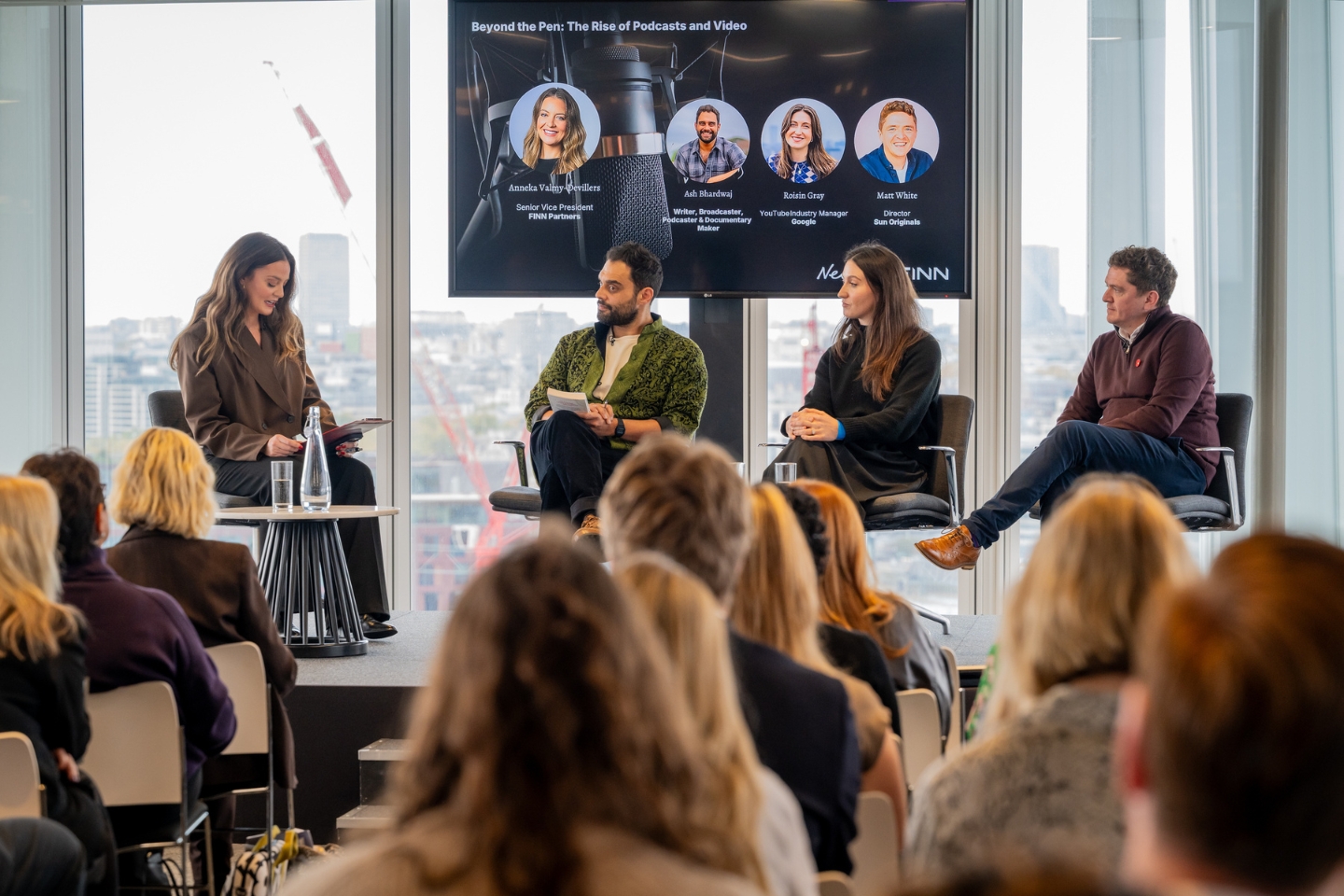
Moderated by Anneka Valmy-Devillers, Senior Vice President, FINN Partners
Ash Bhardwaj, Writer & Documentary Maker
Matt White, Director, Sun Originals
Roisin Gray, Industry Manager of YouTube, Google
- Attention spans aren’t shrinking, expectations are rising. Audiences still engage deeply with long-form content when it delivers value, expertise or entertainment.
- Storytelling isn’t disappearing, it’s evolving. Podcasts, video and written journalism each fulfill different audience needs and increasingly work together rather than competing with one another.
- Authenticity wins over production value. Audiences are drawn to creators and publishers who bring personality, transparency and expertise.
- Podcasts now occupy a unique position as both audio and video media. Rather than existing in a single format, successful podcast franchises are increasingly built to meet audiences wherever and however they consume content.
- The strongest stories are designed to travel across formats. A single idea may begin as an article, evolve into a podcast discussion and ultimately become a video clip or social conversation, creating multiple pathways to audience engagement.
The community effect
The power of belonging
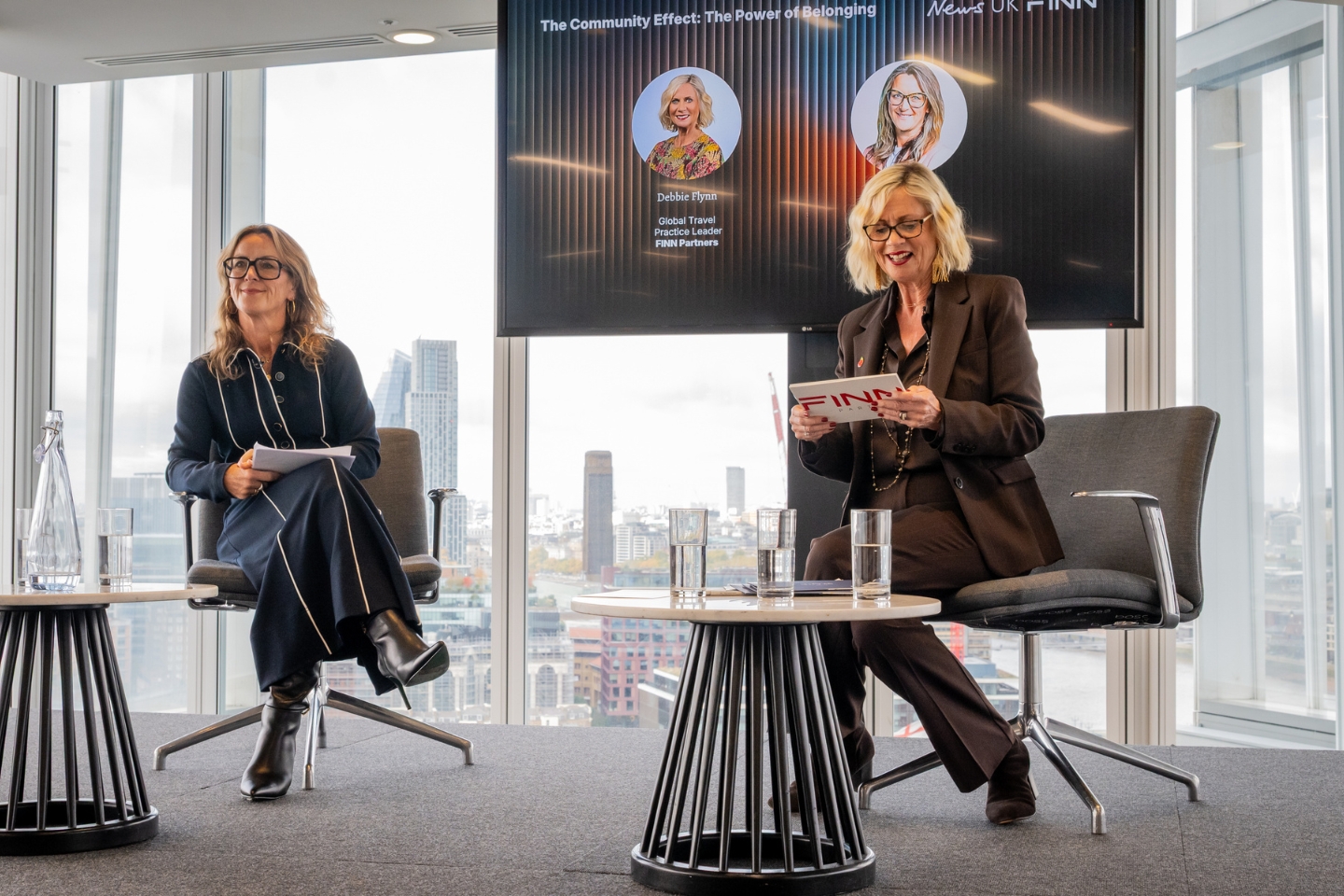
Debbie Flynn, Global Travel Practice Leader, FINN Partners
Claire Irvin, Head of Travel, The Times & The Sunday Times
- Wellness is evolving from self-care to shared experience. Travelers increasingly seek connection, participation and personal growth alongside traditional wellness offerings.
- People are choosing experiences as much as destinations. From run clubs and wellness retreats to interest-led travel communities, travelers are increasingly motivated by what they will do and who they will meet.
- Community is becoming a competitive advantage. Brands that facilitate meaningful connection are differentiating themselves in an increasingly crowded marketplace.
- The rise of solo travel is not necessarily about traveling alone. Many travelers are seeking opportunities to meet like-minded people, learn new skills and connect with communities that extend beyond the trip itself.
- Hospitality is increasingly being judged by the quality of interactions it enables. As consumers place greater value on belonging and shared experiences, hotels and destinations have an opportunity to design spaces and programming that foster meaningful human connection.