News and Insights
Media training: all you need to know
November 10, 2026
In this blog, you will learn:
- Why media training is important and how it is valuable in a range of settings
- What media training involves
- How to handle a journalist’s questions and, all importantly, get your message across.
Many spokespeople are a bit daunted by the prospect of being interviewed if they have no experience of taking a journalist’s questions. They may know they should include their brand’s key messages in their answers, but be unsure how to do that and fear they will forget in the moment. We get asked often about interview techniques, how to prepare and if we have any tips for staying calm if questioning gets tough.
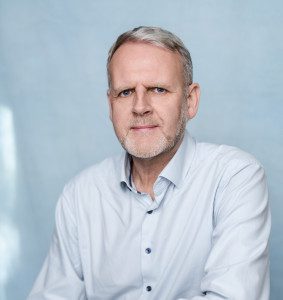 With this in mind, we put some common questions to media trainer Robert Taylor, managing director of Robert Taylor Communications. Here is what he said:
1. Who should be media trained?
I’d advise anyone who is ever going to carry out an interview with a journalist to receive media training. It’s not just about making sure that you don’t get misquoted or misrepresented, crucial though that is. Even more importantly, it’s about shaping your key messages to enable you to achieve your own business objective. What people who have never received media training often fail to realize is that an interview is not only about answering questions; it’s also about communicating what you consider to be important for the audience to hear – i.e. your key messages.
Having said that, I have carried out many media training sessions for delegates who are not required to speak to the media, but who do need to communicate more effectively in any setting, including meetings, Q&A sessions, panel discussions and important 1-2-1 conversations. Media training is a fabulous way to improve communications skills across all these settings, because the skills are so transferable.
2. What does media training involve?
My media training sessions are interactive right from the start, mixing simulated interviews (usually on camera) with simple theory sessions, video review, feedback from me and other delegates and tailored areas for improvement. My objective for a session, regardless of the organization and the subject matter, is always the same: that delegates should leave with the tools, techniques and confidence to carry out an effective media interview of any sort, print, digital, broadcast or podcast, live or recorded.
I’ve lost count of the number of delegates (thousands probably) who arrive at the start of a media training session looking uneasy or even frightened. This includes very senior executives. But by the end, they always say that it was much more enjoyable and stimulating than they imagined. That’s as it should be. I like to make my sessions both useful and fun.
3. What are your tips for handling tough questions?
- Prepare for the very worst “killer questions” in advance and decide exactly what you’re going to say. Remember that you don’t always have to answer a question just because a journalist has asked it. There may be good reasons (e.g. security, data privacy, client confidentiality) why you can’t. But if you cannot answer a question, always address it. We go into the ways you can do that during the training session
- Remember that a tough question isn’t a threat; it’s an opportunity to communicate a positive response. ‘Bridging’ from negative to positive is a crucial technique to learn
- Don’t take a tough question personally. Journalists are just doing their job
- If you are satisfied with your first answer to a tough question, don’t be bullied into giving a different answer if the journalist puts it to you again with a different form of words.
4. Are media training techniques difficult to remember in the moment?
I deliberately keep my media training techniques simple and easy to remember and use, even under intense pressure. Carrying out a good media interview – one that achieves your business objective – is not rocket science. At its heart, it’s about preparing strong messages and proof points before the interview, then making sure that you bridge into them as the interview progresses.
Remember that an interview should be about joint sovereignty between journalist and interviewee. They should share control. Ideally, then, the journalist gets a good story and the interviewee achieves their objective.
5. When interviewees prepare, how should they split their time between rehearsing question-handling techniques and their own key messages?
I always advise the 80-20 rule of preparation, where a minimum of 80 per cent of your preparation is about what you proactively want to say (your messages and proof points) and a maximum of 20 per cent is about predicting and preparing for sensitive/difficult/left-field questions. That’s the best way to achieve your business objective.
It’s a good idea not to learn what you want to say off by heart, word by word, because that will make you appear scripted. You should know the direction of travel, but give yourself license to find the right words in the moment. An interview should always feel to all parties like a conversation, not a performance.
__________________________________
FINN Partners recommends that spokespeople who engage with journalists receive media training. We can arrange this and help you prepare as part of a comprehensive public relations program.
Find out about FINN Partners’ suite of public relations services and contact us to discuss your needs.