News and Insights
Infosecurity Europe 2026 recap: Media mentions rose 20% and AI stole the show. Here are our key takeaways from this year’s show floor.
July 6, 2026
In this blog, you will learn:
- Key differences between the 2025 and 2026 shows, with this year seeing a significant rise in media mentions
- How to cut through the noise at big events: what tools and tactics saw the most traction with media
- The popularity of networking events within the main show
- Practical takeaways for marketers considering events in 2H 2026 and beyond
A milestone in any cybersecurity professional’s calendar, Infosecurity Europe is over for another year. As anyone on the ground at this year’s event can confirm, exhibitors and attendees may have contended with Tube strikes and torrential rain, but the show proved to be a worthwhile investment for cybersecurity vendors, nonetheless.
Indeed, according to FINN Partners’ Research and Insights, the 2026 event saw 4,680 media mentions in the months surrounding the event (1 April 2026 – 22 June 2026), a 20% increase on the 3,900 mentions generated during the same period in 2025. Daily mentions also climbed to an average of 56, compared to 31 the previous year.
Media coverage of the event spiked in the week leading up to it, with 795 mentions (99 on average daily) recorded between 25 May and 1 June 2026. By releasing news ahead of the doors opening, many vendors managed to secure coverage in this period and avoid the battle for media attention once the event was in full swing. As prominent cybersecurity journalist Phil Muncaster put it in our recent whitepaper: “Any news launched during [Infosecurity Europe] will get lost in the noise.”
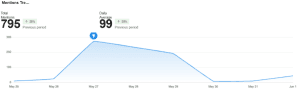
Pre-event mentions of Infosecurity Europe, between 25 May 2026 and 1 June 2026
The event and post-event period saw a further 3,100 mentions and a daily average of 149 (2-22 June 2026), with the trade press such as Infosecurity Magazine, AI Journal and Computer Weekly unsurprisingly dominating.
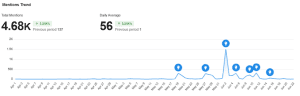
Total mentions of Infosecurity Europe between 1 April and 22 June 2026
AI stole the show, with research a major conduit
While AI was an emerging concern in 2025, with discussions at last year’s event focusing on “shadow AI” and more generalised AI threats, it dominated the debate in 2026. There was significant media interest in innovations including AI SOCs and the new OWASP Agentic Research Council, which was unveiled at the show.
A number of exhibitors’ reports and sessions focused on these issues, warning that AI is making light work for attackers, with it now harder to detect malware and malicious cybercrime tooling becoming increasingly accessible on the dark web. For example, Cynthia Kaiser, SVP of Ransomware Research Center at Halcyon, revealed an exclusive dark web analysis conducted by her team during a keynote session. The data and insights shared by Kaiser at the show saw strong traction in IT and cybersecurity media, becoming one of the most widely cited announcements from this year’s event.
AI aside, identity, trust and operational preparedness also remain central concerns for the industry. A survey conducted at this year’s Infosecurity Europe by KnowBe4 pointed to gaps in threat detection confidence across non-email channels such as Microsoft Teams and Slack, which was also well received by IT and cybersecurity media.
Research that sheds new light on a pressing issue of the day remains a big draw for the media. As cybersecurity writer Dan Raywood told us before Infosecurity Europe began: “I’ve said yes [to a meeting] when there is something to hear at a show – you’re launching research and someone is there who can talk about it, maybe you’ve got a second person too from a different company, who can also comment: if a journalist can get a few comments on a story, there’s more chance they will write it up.”
Another B2B reporter added: “I’m much more interested when there is a clear reason for the conversation [with a vendor], such as new research, a useful take on world events or something that brings fresh human insight.”
You’ll find more journalist insights in our event playbook, which explores how to derive PR value from events and what reporters really care about: The event influence playbook.
Shift focus from products to the topic du jour
While 2025’s event leaned into specific cybersecurity product enhancements, including passwordless and identity security posture management, this year’s event saw themes revolving around board-level governance and leadership responsibilities for the C-suite take centre stage. Amid a volatile geopolitical backdrop, data sovereignty and sovereign-cloud availability also emerged as priorities alongside AI adoption, with cloud and security vendors promoting sovereign-cloud availability and data sovereignty as part of their 2026 Infosecurity Europe messaging.
The human connection: Social networking mixers drew a crowd
In a theme not seen quite as prominently in previous years, social mixers and networking parties (such as the Cyber House Party) and exhibitors that went beyond the traditional exhibition booth experience (Menlo Security’s ‘Menlo Tavern’ stand, for example) were big draws for the 2026 Infosecurity Europe community. Six years on from the Covid lockdowns, visitors clearly value opportunities to connect with peers in-person at big industry events.
Events in 2H 2026 and beyond: What are the key takeaways for marketers?
- Focus less on products and more on the issues of the day: AI stole the show in 2026, while data sovereignty was also front of delegates’ minds
- Research is a highly effective way to highlight sector knowledge and expertise, making a meaningful contribution to the wider conversation with data
- Timing is key: consider releasing announcements in the lead-up to a major event to avoid getting lost in the noise
- Creating social mixing and networking opportunities rather than just traditional booth spaces is increasingly popular with delegates and media
You’ll find our analysis of last year’s Infosecurity Europe, with further practical advice for events here: Why the biggest stand isn’t always the biggest story: Lessons learned as we look ahead to Infosecurity Europe 2026
If you’d like to hear more about how we support cybersecurity companies, including with events, please don’t hesitate to get in touch via TechLondon@finnpartners.com
FAQs
Q: What were the biggest themes at Infosecurity Europe 2026?
A: Artificial intelligence dominated discussions at Infosecurity Europe 2026, alongside data sovereignty, cyber resilience, identity security and operational preparedness. The event also highlighted the growing importance of original cybersecurity research in driving industry conversations.
Q: What can B2B marketers learn from Infosecurity Europe 2026?
A: B2B marketers should focus on addressing industry challenges, produce original research, plan announcements well ahead of events and create opportunities for meaningful networking rather than relying solely on exhibition stands.
Q: Why are networking events becoming more important at cybersecurity conferences?
A: Networking events allow vendors, customers and journalists to build relationships in a more relaxed environment. These informal interactions often create opportunities for conversations that are difficult to have on a busy exhibition floor.
Q: How can businesses maximise ROI from cybersecurity events?
A: Businesses can maximise event ROI by planning campaigns months in advance, securing media briefings before the event, publishing research, arranging customer meetings and extending content promotion after the conference has ended.
POSTED BY: